NVIDIA Unveils Blackwell Ultra Architecture
NVIDIA's Blackwell Ultra GPUs target enhanced performance for large-scale AI model training and inference.
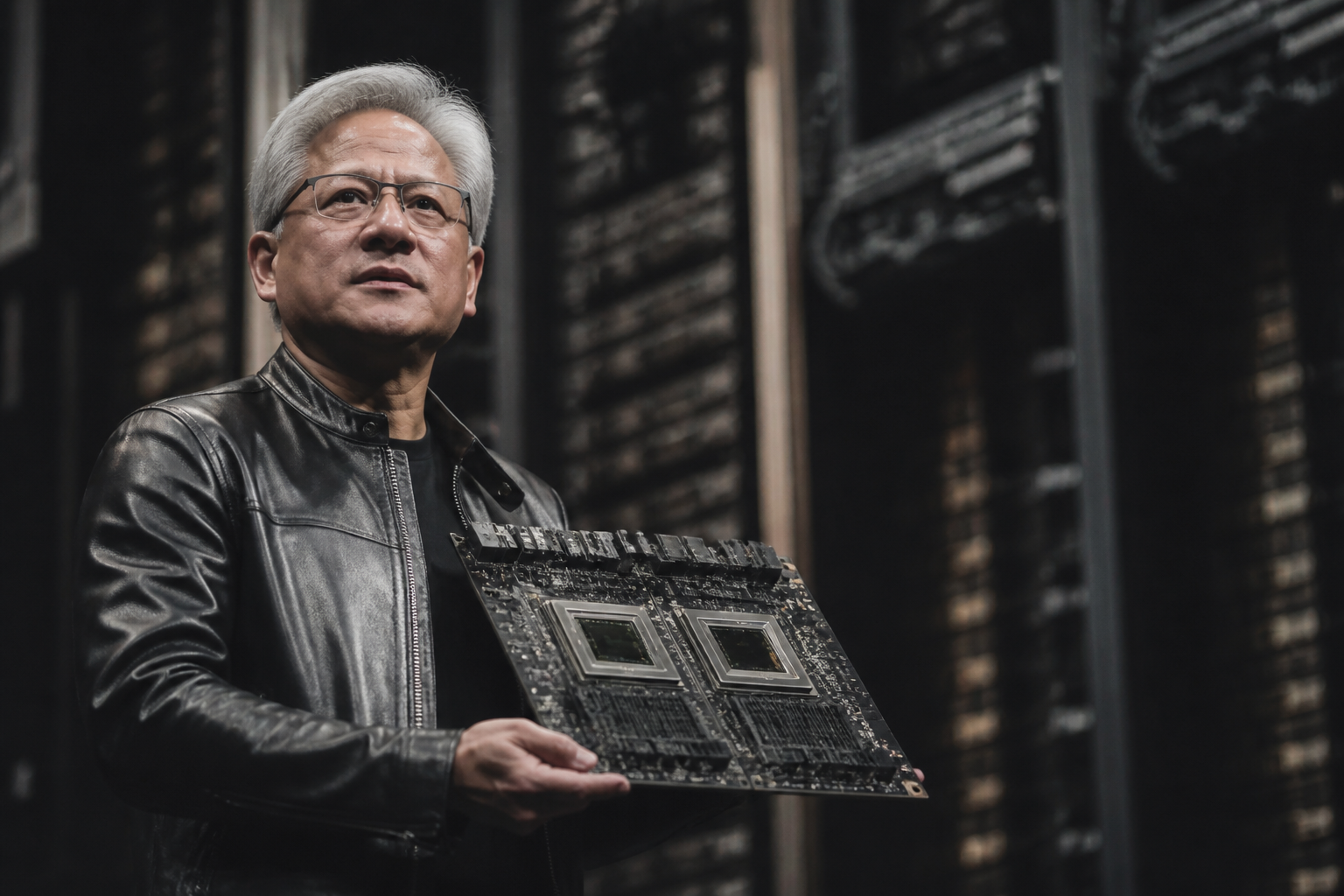
NVIDIA has revealed details regarding its Blackwell Ultra graphics processing units, designed to address the increasing computational demands of artificial intelligence development. The Blackwell Ultra architecture builds upon previous generations with advancements in core processing capabilities and memory sub-systems.
The Blackwell Ultra GPUs incorporate dedicated tensor cores, optimising matrix multiplication operations crucial for neural network computations. These units are engineered to deliver notable increases in floating-point operations per second (FLOPS) compared to their predecessors. The architecture also features a redesigned cache hierarchy to enhance data access speeds for large AI models. Early specifications suggest a focus on improved throughput for both FP8 and FP16 precision workloads.
Memory bandwidth has received a substantial upgrade with the integration of HBM3e high-bandwidth memory. This enhancement is critical for accommodating the large parameter counts of contemporary large language models (LLMs) and other deep learning architectures. The increased aggregate memory bandwidth facilitates faster data transfer between the GPU and its local memory, reducing bottlenecks during complex training operations.
Blackwell Ultra also introduces advancements in inter-GPU communication. NVIDIA's NVLink technology sees improvements in its fifth generation, supporting higher data transfer rates between multiple GPUs within a single server or across distributed computing clusters. This is a vital component for scaling AI workloads that span hundreds or thousands of interconnected accelerators.
Initial benchmarks, shared during the announcement, indicated a performance uplift for specific AI tasks, particularly in transformer-based models. These performance gains are attributed to the combination of enhanced compute capabilities, increased memory throughput, and accelerated inter-GPU data exchange. The architecture is positioned to support the expansion of AI into new domains requiring greater computational power.
The introduction of Blackwell Ultra follows NVIDIA's consistent strategy of iterative hardware development, responding to the evolving requirements of the AI research and development community. The new GPUs represent another step in providing the foundational infrastructure for future AI innovation.
More from The Singularity Times
- Chinese AI Labs Anchor Recursive Self-Improvement to Industrial Policy23 Oct 2026 · 16:31 UTC
- Jack Clark Warns IMF That Technological Singularity Is Underway23 Oct 2026 · 16:31 UTC
- AI Infrastructure Buildout Clashes With Grid Interconnection Delays23 Oct 2026 · 16:31 UTC
- Token Throughput Disparity Emerges as Core Metric in US-China AI Rivalry23 Oct 2026 · 16:31 UTC
- Honolulu Civil Beat Restricts Generative AI to Back-Office Data Tasks23 Oct 2026 · 16:31 UTC