Samsung Reports 933% Profit Increase Driven by AI Memory Chip Demand
Samsung Electronics exceeded first-quarter profit estimates, reporting 6.6 trillion won operating profit, fuelled by strong high-bandwidth memory chip sales and contributing to a broader semiconductor rally.
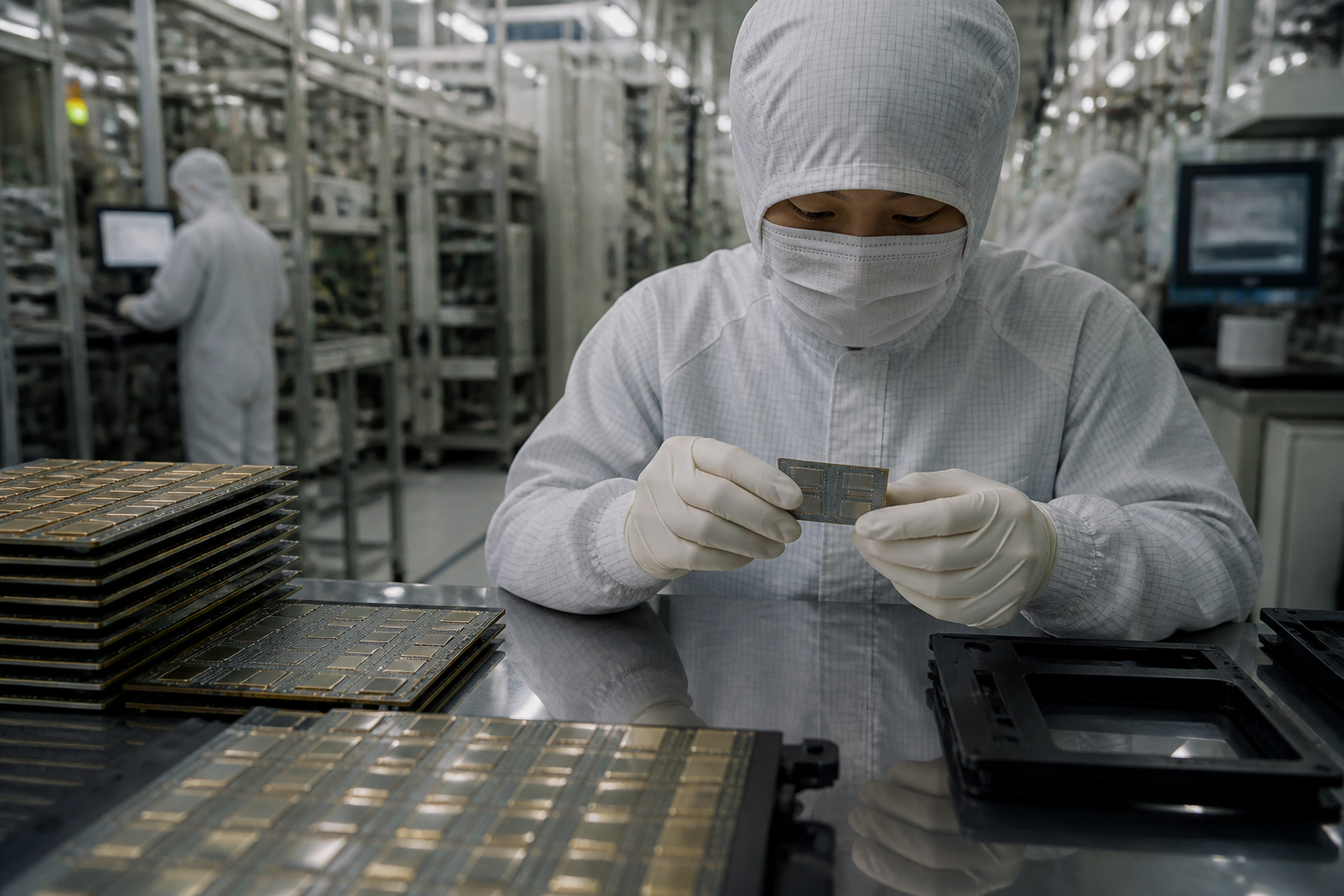
Samsung Electronics reported a 933% increase in operating profit for the first quarter of 2024, reaching 6.6 trillion won (£3.84 billion). This figure surpassed the company's own guidance of 6.4 trillion won issued earlier in April. Revenue for the quarter rose by 13% year-on-year, totalling 71.9 trillion won.
The robust performance was attributed primarily to heightened demand for high-bandwidth memory (HBM) chips, which are critical components in artificial intelligence systems. Samsung is a key supplier of these advanced memory solutions. The company's memory chip business returned to profitability during the quarter, indicating a significant market recovery.
This strong showing by Samsung contributed to a positive sentiment in the broader chip sector. On 26 April, the PHLX Semiconductor Index (SOX) climbed by 1.6%. Notable gains included Advanced Micro Devices (AMD) which increased by 1.7%, while Nvidia saw a rise of 1.4%. Micron Technology also experienced a 2.7% uplift.
Optimism regarding future AI-driven growth continues to underpin investor confidence in semiconductor manufacturing. Samsung's capital expenditure for the first quarter was 8.4 trillion won, with 7.6 trillion won allocated to semiconductors. The company plans to sustain investment throughout 2024 to enhance its HBM and other high-value memory production capacities. Expectations for the second quarter are also positive, with analysts forecasting continued growth in both operating profit and revenue.
The global AI market's expansion translates directly into increased demand for specialised hardware. Samsung's strategic focus on advanced memory solutions positions it to capitalise on this trend. How long can this demand-driven surge sustain such high growth rates for chip manufacturers?
More from The Singularity Times
- Chinese AI Labs Anchor Recursive Self-Improvement to Industrial Policy23 Oct 2026 · 16:31 UTC
- Jack Clark Warns IMF That Technological Singularity Is Underway23 Oct 2026 · 16:31 UTC
- AI Infrastructure Buildout Clashes With Grid Interconnection Delays23 Oct 2026 · 16:31 UTC
- Token Throughput Disparity Emerges as Core Metric in US-China AI Rivalry23 Oct 2026 · 16:31 UTC
- Honolulu Civil Beat Restricts Generative AI to Back-Office Data Tasks23 Oct 2026 · 16:31 UTC